AP-NORC Poll: Price Anxiety and Tariffs Drive Voter Sentiment on Election Day
New data shows a majority of Americans blame the president for high costs, a sentiment reflected in the words of voters in Raleigh and Palm Beach.
By Nikolai Patterson ·
On Election Day, Tuesday, November 3, 2026, the national conversation is dominated by the cost of living. The Associated Press describes this midterm election as a referendum on President Donald Trump's second term, noting that voters are struggling with high prices and are angry over an unpopular war with Iran. The stakes are high, as the results will determine which party controls Congress for the president's final two years. With all 435 House seats and 35 Senate seats up for grabs, the economic mood in polling places is palpable.
The Associated Press and NORC Center for Public Opinion Research released polling data that underscores the centrality of economic concerns. Only 35 percent of U.S. adults approve of the president's job performance, while just 25 percent approve of his handling of the economy. Furthermore, about seven in 10 Americans say the country is heading in the wrong direction. The data indicates that most voters blame the president for the current high prices, a sentiment that has become the primary driver of voter turnout and candidate selection in this cycle.
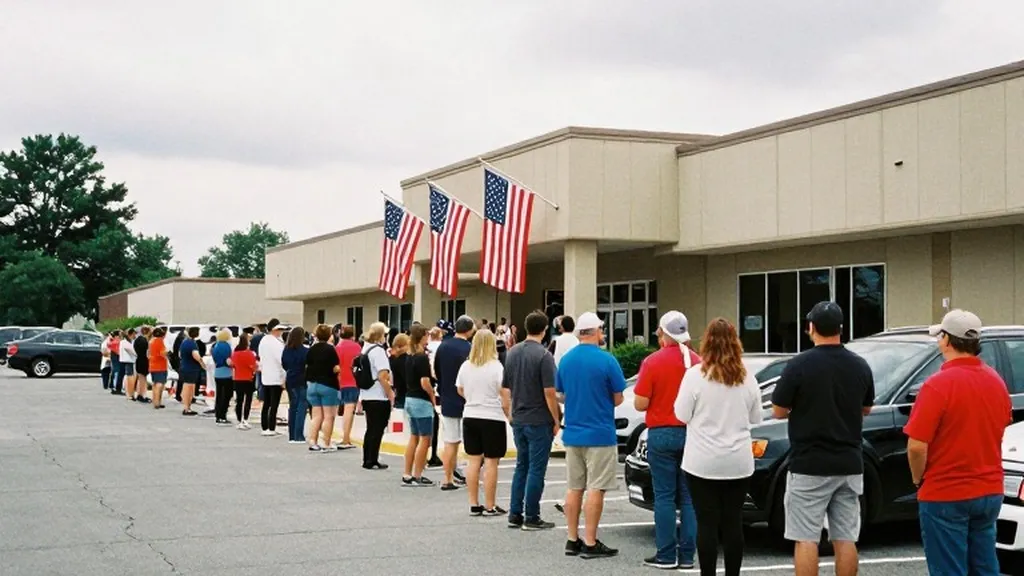
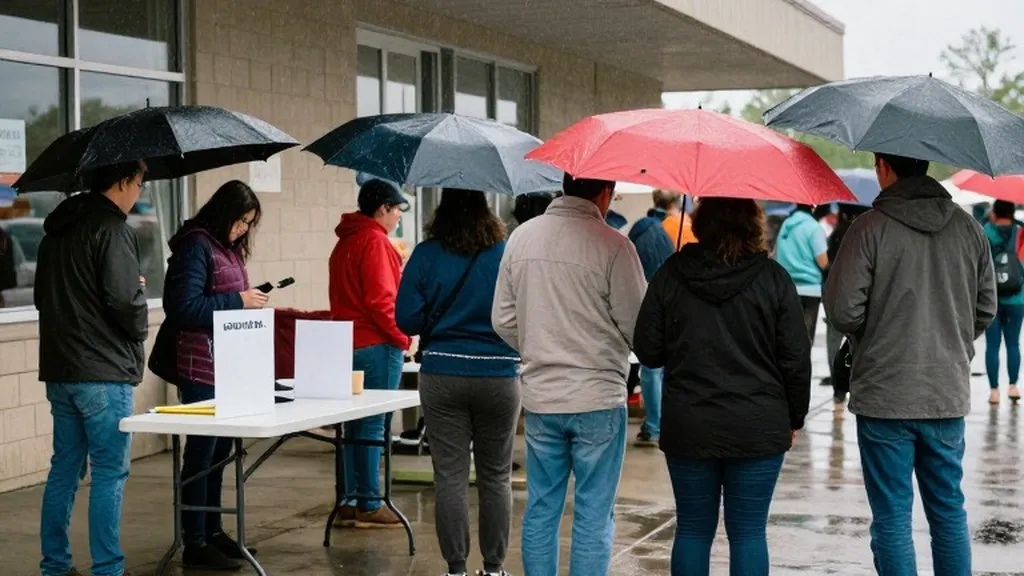
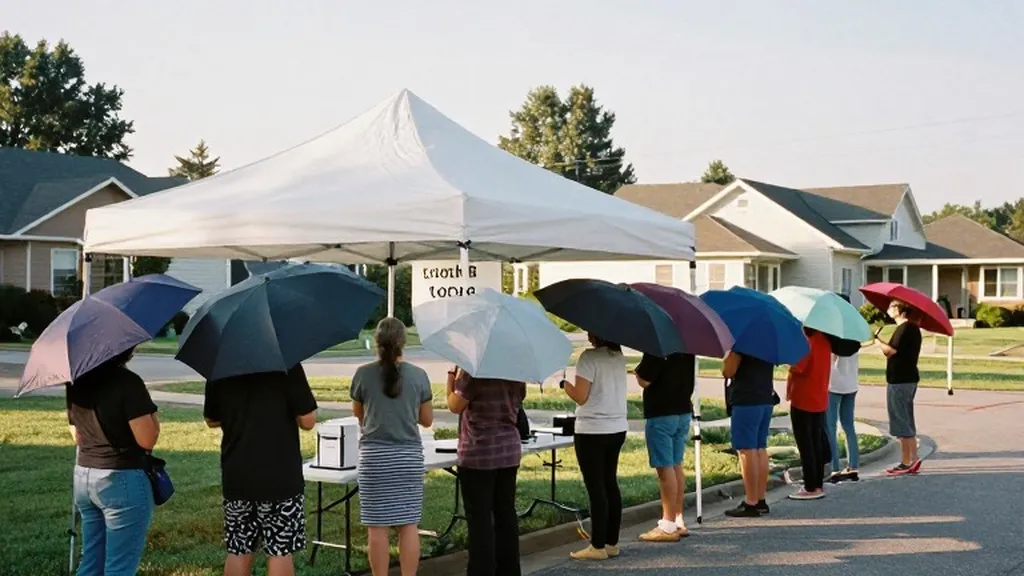
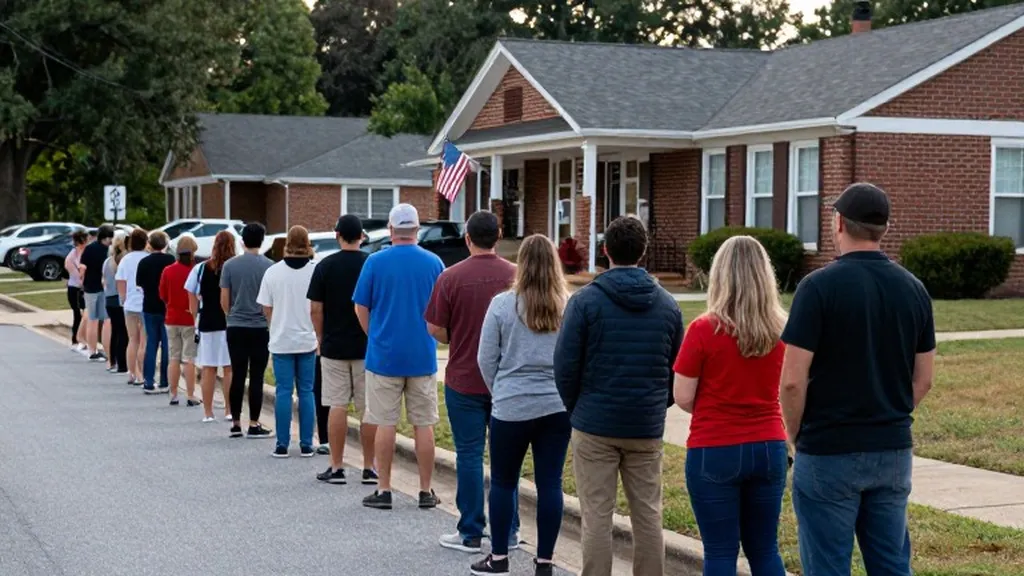
In Raleigh, North Carolina, the economic pressure is felt in daily life. James Moore, a 57-year-old librarian, expressed his frustration while waiting in line to vote. He noted that he is paying more taxes, more for his healthcare, and more for everything. His comments mirror the broader narrative in North Carolina, a state with a new congressional map and a competitive Senate race. Former Governor Roy Cooper faces Michael Whatley in the Senate contest, a race that the Associated Press highlights as a key battleground where economic strain is a deciding factor.
Contrastingly, in Palm Beach Gardens, Florida, voter Mark Barker expressed a different view. He stated that he has been following the president the whole time and believes he is doing an awesome job. Florida is another state using a new congressional map, and it faces a special Senate election. The state’s competitive landscape is shaped by the interplay of national economic trends and local political dynamics, with Republicans and Democrats both vying for control in districts that voted for different presidential candidates in 2024.
The issue of tariffs has emerged as a specific economic grievance. The Associated Press notes that economic strain and tariffs have made states like Maine highly competitive. In Maine, Senator Susan Collins faces Democratic former state Senate President Troy Jackson. The state’s voters are weighing the impact of trade policies on local prices, a theme that resonates across the 46 battleground House districts identified by Ballotpedia. These districts are critical because Democrats need a net gain of three seats to take the House, while Republicans can afford to lose no more than two.
Money and media have played significant roles in shaping the economic narrative. The 2026 elections are likely to be the most expensive in history. Republican committees outspent and outraised their Democratic counterparts, aided by Trump-affiliated groups and Elon Musk. An analysis by the Associated Press of AdImpact data shows that 88.1 percent of Republican general election TV ad spending went to states and districts the president won in 2024. This heavy investment in safe seats contrasts with the Democratic strategy of focusing on competitive areas where price anxiety is highest.
Democratic leaders are capitalizing on this economic discontent. House Democratic Leader Hakeem Jeffries has outlined a 100-day agenda focused on the cost of living and oversight of the administration. If Democrats win even one chamber, investigations and possible impeachment proceedings become likely. The party’s cautious optimism is rooted in the belief that voters are angry and want change, a sentiment echoed by Democratic Congressional Campaign Committee Chair Suzan DelBene, who stated that the American people are angry and want change.
The Republican Party, however, is bracing for potential losses in the House while fighting to hold the Senate. RNC Chairman Joe Gruters emphasized that everything depends on turnout, stating that if they turn out their voters, they will win. The party has tried to beat the historical midterm pattern, where a president's party almost always loses seats, through redistricting efforts. However, new districts in states like Florida and North Carolina may not vote as originally drawn, adding a layer of uncertainty to the economic and political calculations.
Administrative challenges also loom over the election. A federal judge temporarily barred the administration from carrying out a plan to prevent noncitizen voting, a move critics say risks disenfranchising eligible voters. The U.S. Postal Service has added hours and staff to ensure mail ballots are counted on time. These logistical efforts are crucial as more than 57 million people had already voted as of Monday, surpassing early vote totals from four years ago in many closely watched states.
As polls close across the country, the focus remains on what voters are deciding. The election is not just about who holds power, but about the direction of the economy. In states like Michigan, Ohio, and Georgia, candidates are debating the impact of federal policies on local wallets. The outcome will shape the legislative agenda for the next two years, with the cost of living and economic oversight at the forefront of the debate. The final tally will reveal whether the economic anxiety expressed by voters in Raleigh and Palm Beach translates into a shift in congressional control.
The day ends with the counting of ballots in states that use mail voting, such as California and Oregon. The results will determine the balance of power in a Congress tasked with addressing the economic concerns that drove voters to the polls. The Associated Press notes that one or two seats could tip the balance in either chamber, making every vote count in this critical midterm election. The economic narrative, driven by the AP-NORC numbers and the voices of voters, will define the next phase of American politics.