57 million early votes set stage for historic turnout fight in 2026 midterms
With polls open, national party leaders and ground teams are focusing on getting voters to the polls after a record-breaking early vote surge.
By Nikolai Patterson ·
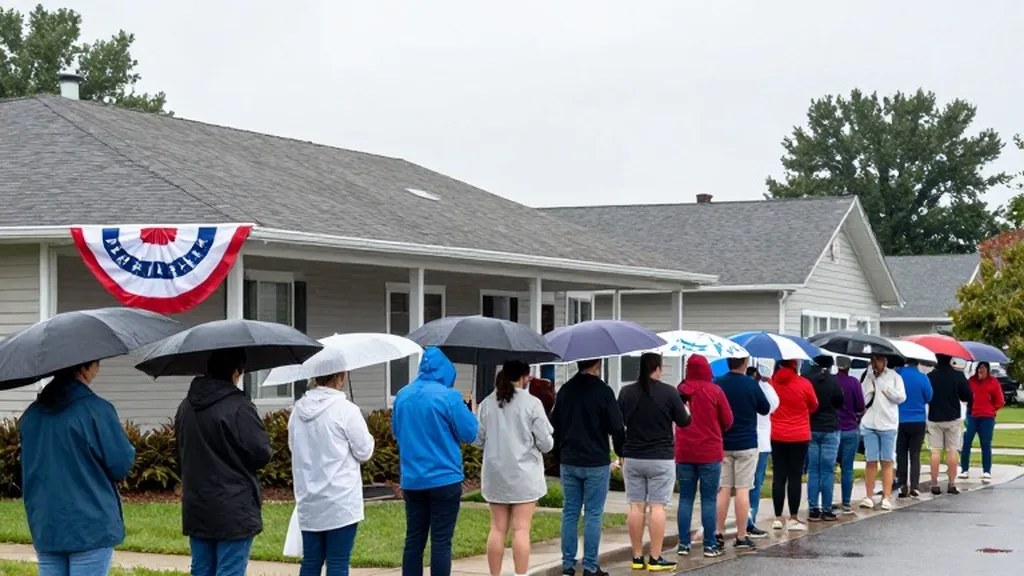
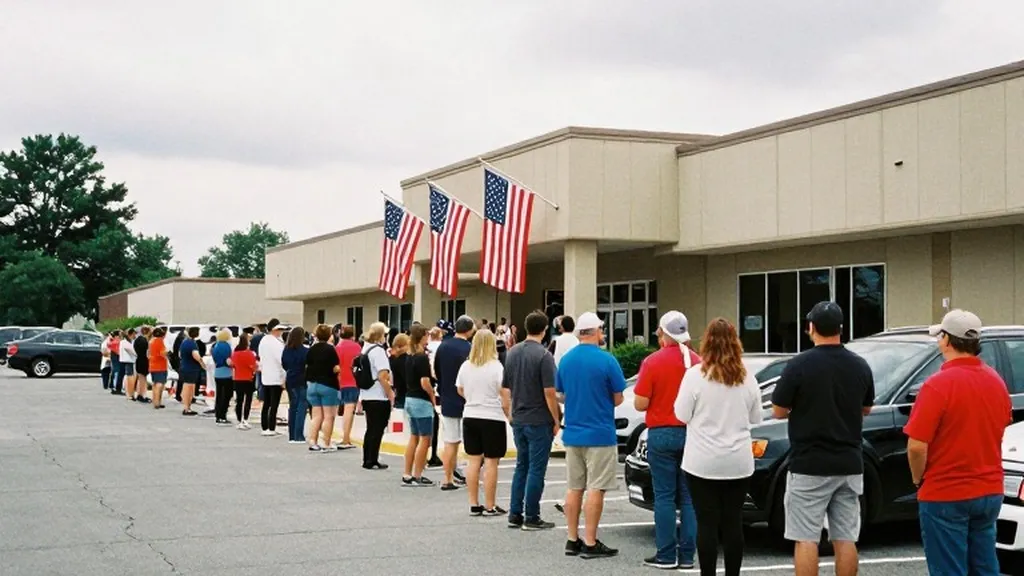
The Associated Press reports that more than 57 million Americans have already cast their ballots in this midterm election, surpassing the early vote totals from four years ago in many closely watched states. This massive early participation has shifted the strategic focus for both political parties from campaign advertising to the logistical challenge of mobilizing voters on Tuesday. The election is widely viewed as a referendum on President Donald Trump's second term, with voters expressing frustration over high prices and anger regarding an unpopular war with Iran. As polls open across the country, the ground game is becoming the primary determinant of which party controls Congress for the president's final two years.
Both parties have built their strategies around specific turnout projections, recognizing that the margin of victory in this midterm will be razor thin. Republicans are bracing for the possibility of losing the House while fighting to hold the Senate, with the Associated Press noting that one or two seats could tip either chamber. Democrats, described by the press as cautiously optimistic, are relying on their ability to energize their base. The stakes are high because the results will decide who holds the balance of power in Washington. With all 435 House seats and 35 Senate seats on the ballot, the outcome hinges on how effectively each side can convert early enthusiasm into final participation.
RNC Chairman Joe Gruters emphasized the critical importance of voter mobilization, stating, "Everything depends on turnout. If we turn out our voters, we win, and that's what we've been planning for." This quote reflects the Republican strategy of maintaining a strong presence in states that President Trump won in the 2024 presidential election. The party's financial advantage is evident in their advertising spending, which has been heavily concentrated in districts where Trump secured a victory by ten points or more. However, the party is also dealing with internal dynamics, as many Republican candidates have kept some distance from the president's recent rallies and claims about voting fraud.
On the other side, DCCC Chair Rep. Suzan DelBene framed the election as a response to voter discontent, saying, "The American people are angry. They want change." This sentiment is supported by polling data from AP-NORC, which shows that 35 percent of U.S. adults approve of Trump's job performance and only 25 percent approve of his handling of the economy. About seven in ten adults say the country is heading in the wrong direction, with most blaming the president for high prices. Democrats are leveraging this economic anxiety to drive turnout, particularly in battleground districts where the cost of living is a primary concern for voters.
The ground game is particularly intense in the 46 House battleground districts identified by Ballotpedia. These districts, including 25 held by Democrats and 21 by Republicans, are the focus of door-to-door canvassing and phone banking efforts. Democrats need a net gain of three districts to secure a majority in the House, while Republicans can afford to lose no more than two seats. The complexity of these races is heightened by the fact that 21 Democratic-held districts voted for Trump in 2024, while nine Republican-held districts voted for Vice President Kamala Harris. This split ticket behavior suggests that voters are making independent decisions on downballot races, making local ground operations essential for both parties.
In the Senate, the fight is equally fierce with 13 races rated as toss-ups or leaning by major forecasting organizations. Ballotpedia highlights races in states like Maine, Iowa, Kansas, Alaska, Michigan, and Georgia as critical to determining the balance of power. Democrats need a net gain of four seats to achieve a majority, a hurdle that requires winning in states that have traditionally favored Republicans. The Associated Press notes that economic strain and tariffs have made states like Maine competitive, where Senator Susan Collins faces a challenge from Democratic former state Senate President Troy Jackson. The outcome of these races will determine whether Democrats can initiate investigations and potential impeachment proceedings if they gain control of either chamber.
Money has played a significant role in shaping the election landscape, with the 2026 midterms likely becoming the most expensive in history. Republican committees outraised and outspent their Democratic counterparts, aided by Trump-affiliated groups and Elon Musk. However, at the candidate level, Democrats outraised their opponents, suggesting a different dynamic in local races. The Associated Press analysis of AdImpact data reveals that 88.1 percent of Republican general election TV ad spending went to states and districts that Trump won in 2024. This targeted spending reflects a strategy to defend the party's base while attempting to hold onto the Senate, even as they face the traditional midterm headwind where the president's party often loses seats.
Voters across the country are expressing their priorities in their own words, reflecting the broader mood of the election. Mark Barker of Palm Beach Gardens, Florida, said he has been following Trump and thinks he is doing an awesome job. In contrast, James Moore, a 57-year-old librarian in Raleigh, North Carolina, noted that he is paying more taxes, more for healthcare, and more for everything. These individual accounts highlight the economic issues that are driving the narrative of the election. The Associated Press describes the mood as one of struggle, with voters angry over the cost of living and the administration's handling of foreign policy, particularly the war with Iran.