Midterm Map: 18 to 18 Split in Governor Races
Democrats seek a historic majority of governorships as 19 open seats and nine battlegrounds define the race for state executive power.
By Layla Richardson ·
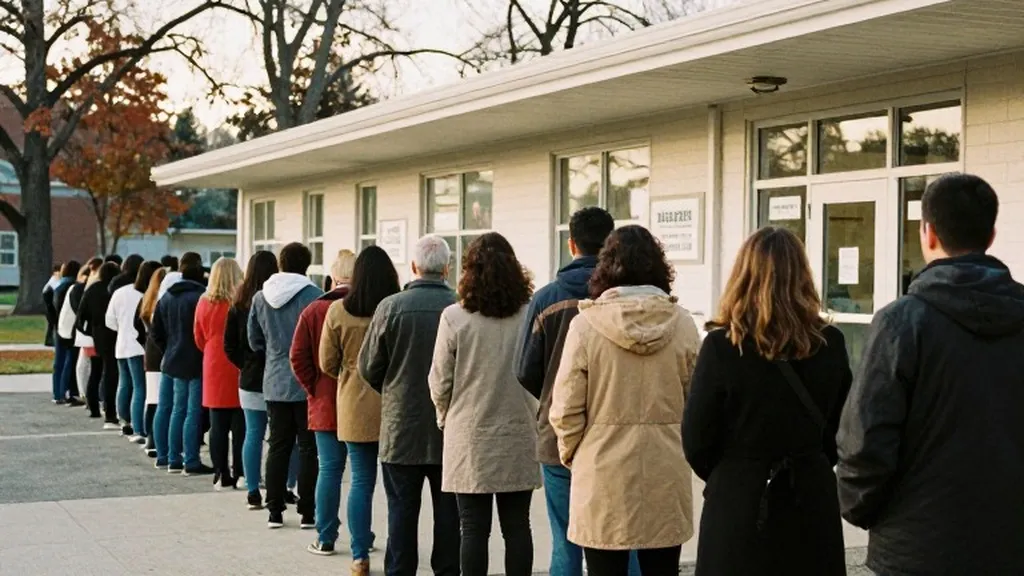
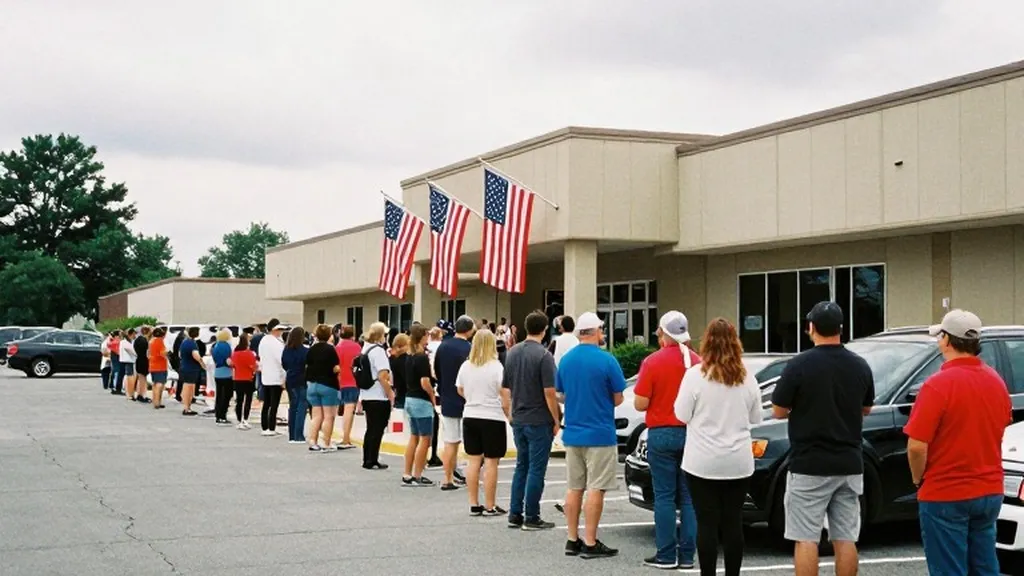
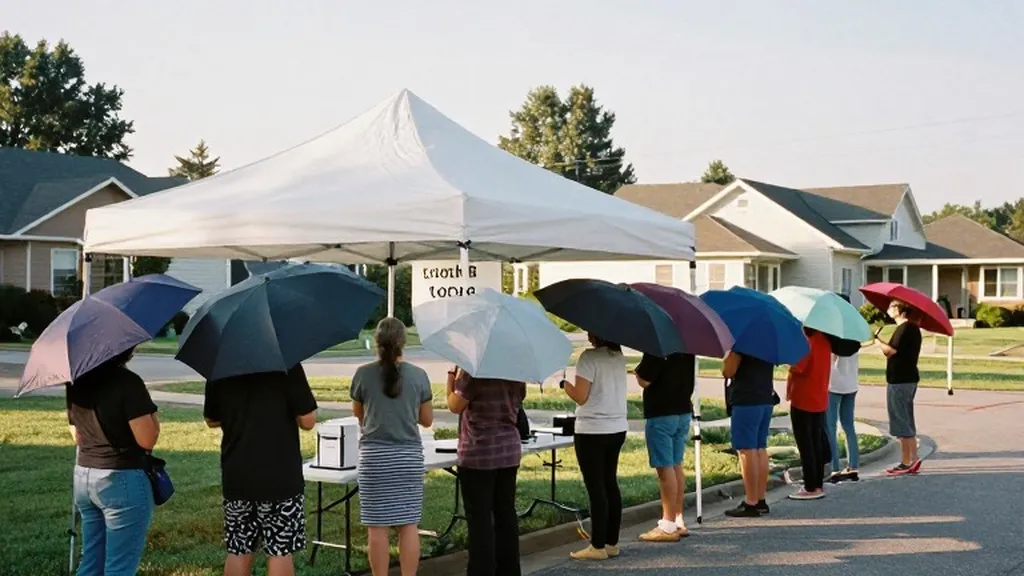
As polls open across the nation on this Election Day, the contest for state executive power presents a uniquely balanced landscape. There are 36 governorships on the ballot this Tuesday. Heading into the vote, Republicans hold 26 of the country's governor's offices while Democrats hold 24. Among the specific races decided today, the parties are evenly matched, with each holding 18 of the 36 open seats. This symmetry sets the stage for a pivotal fight for state leadership in the second half of President Donald Trump's second term.
The structure of this year's gubernatorial elections is heavily influenced by turnover. Nineteen of the 36 races feature no incumbent on the ballot. Ballotpedia notes that 15 of these vacancies are due to term limits. In the remaining cases, Iowa's Kim Reynolds, Minnesota's Tim Walz, and Wisconsin's Tony Evers chose not to seek reelection. Additionally, Rhode Island's Daniel McKee lost his primary challenge. This high number of open seats allows both parties to field fresh candidates without the burden of defending a specific predecessor's record.
For Democrats, the stakes are particularly high as they aim to claim a nationwide majority of governorships for the first time in two decades. Republicans have controlled more than half of the governor's offices since 2010. A net gain of two seats is required for Democrats to achieve this milestone. If successful, this would provide a significant counterweight to the federal government and offer a platform for policy experimentation in key states.
The competitive landscape is defined by nine specific battlegrounds identified by Ballotpedia: Alaska, Arizona, Georgia, Iowa, Kansas, Michigan, Nevada, Ohio, and Wisconsin. In these states, the outcome is closely contested. Democrats are tasked with defending five governorships in states that President Trump won in the 2024 presidential election. These include Arizona, where Katie Hobbs is running, as well as Kansas, Michigan, Pennsylvania, and Wisconsin. Josh Shapiro is the incumbent in Pennsylvania, a state that also features in the competitive list.
Republicans face the challenge of defending two governorships in states that Kamala Harris won in 2024. These are New Hampshire, where incumbent Kelly Ayotte is seeking another term, and Vermont, where Phil Scott is running. The Associated Press and PBS NewsHour have highlighted several key matchups within this set of races. In Georgia, Republican health care executive Rick Jackson is facing Democratic former Atlanta Mayor Keisha Lance Bottoms to succeed Brian Kemp. The AP describes Georgia as one of the competitive races alongside Texas and Florida, although Texas and Florida are not in the primary list of nine battlegrounds for the specific 18 to 18 split analysis.
In Nevada, Republican Governor Joe Lombardo is challenging Democratic Attorney General Aaron Ford. The AP notes that Nevada is a critical state in this year's midterms. In Ohio, the race features Republican Vivek Ramaswamy against Democrat Amy Acton. Ramaswamy's campaign has faced some scrutiny, including backlash over an advertisement that featured Acton's estranged mother. These matchups illustrate the intense personal and policy clashes characterizing the 2026 cycle.
The broader political mood is described by the Associated Press as a referendum on the administration's performance, with voters struggling with high prices and expressing anger over the war with Iran. AP-NORC polling indicates that 35 percent of U.S. Adults approve of President Trump's job performance, while about seven in 10 believe the country is heading in the wrong direction. Many voters blame the president for high prices. This sentiment is driving turnout, with more than 57 million people having already voted as of Monday, surpassing early vote totals from four years ago in many closely watched states.
Financial dynamics play a significant role in these races. The 2026 elections are likely to be the most expensive in history. Republican committees have outraised and outspent Democratic committees at the committee level, aided by Trump-affiliated groups and Elon Musk. However, at the candidate level, Democrats have outraised their opponents. An AP analysis of AdImpact data shows that 88.1 percent of Republican general election television ad spending went to states and districts that Trump won in 2024. This includes more than $850 million in spending in areas where he won by 10 points or more, reflecting a strategy to secure holds in solidly Republican territories.
Voters are also weighing the impact of redistricting on these races. Six states, including California, Florida, Missouri, North Carolina, Tennessee, and Texas, are using new congressional maps following mid-decade redistricting. Ohio is also using a new map. While these changes primarily affect House races, they can influence the political environment for gubernatorial contests by altering the balance of power within state legislatures and shifting voter demographics. The AP notes that Republicans tried to beat the midterm pattern with redistricting, but new districts may not vote as drawn.
The outcome of these 36 races will have immediate implications for state policy and future national politics. A strong Democratic night would boost potential 2028 candidates such as Gavin Newsom, JB Pritzker, and Pete Buttigieg. Conversely, a Republican hold on the governorships would solidify their control over state governments. As voters head to the polls, the focus remains on the 18 to 18 split and the nine battlegrounds that will determine which party holds the edge in state executive power for the next four years. The results will be known as polls close across the country, with some states opening as early as 5 a.m. Local time.