House Race Hinges on 46 Battleground Districts and Three-Seat Margin
With all 435 seats up for grabs, Democrats need a net gain of three districts to reclaim the majority, a tight threshold that turns the outcome of specific contests in newly drawn maps into the deciding factor of the day.
By Layla Richardson ·
All 435 seats in the U.S. House of Representatives are on the ballot today, creating a scenario where a three-seat margin determines which party controls the chamber for the final two years of President Donald Trump's second term. Republicans currently hold 218 seats, while Democrats hold 214, with one independent seat and several vacancies remaining to be filled. Democrats must achieve a net gain of three districts to secure a majority, whereas Republicans can afford to lose no more than two seats to retain control. This razor-thin margin places an immense amount of pressure on the 46 battleground districts, which includes 25 districts currently held by Democrats and 21 held by Republicans.
The competitive nature of these 46 districts is further complicated by the shifting political landscape established in the 2024 presidential election. Ballotpedia data indicates that 21 of the districts held by Democrats voted for President Trump in 2024, while nine districts held by Republicans voted for Vice President Kamala Harris. This overlap suggests that the partisan alignment in these areas is fluid, making them critical targets for both parties as they fight for a slim advantage. The Associated Press describes the election as a referendum on the president's second term, with voters struggling with high prices and expressing anger over an unpopular war with Iran. These economic and foreign policy concerns are driving voter turnout in these closely watched districts.
Seven states are using new congressional maps for this election, a result of mid-decade redistricting efforts. These states include California, Florida, Missouri, North Carolina, Tennessee, and Texas, with Ohio also utilizing a new map. The Associated Press notes that while Republicans attempted to beat the historical midterm pattern, where a president's party almost always loses seats, through these redistricting efforts, the new districts in Florida and other states may not vote exactly as they were drawn. The uncertainty surrounding how these new lines will perform adds another layer of complexity to the House race, as campaigns try to predict which voters will cross into new district boundaries and how local dynamics will shift.
Financial resources are playing a significant role in shaping the outcome of these House races. The 2026 elections are likely to be the most expensive in history, with Republican committees out-raising and out-spending their Democratic counterparts. This advantage has been bolstered by Trump-affiliated groups and billionaire Elon Musk. However, an analysis of AdImpact data reveals that 88.1% of Republican general election TV ad spending has been directed to states and districts that Trump won in 2024. This includes more than $850 million in spending in areas where he won by 10 points or more. Despite this committee-level advantage, Democrats have out-raised their opponents at the candidate level, allowing them to sustain a strong presence in the battleground districts.
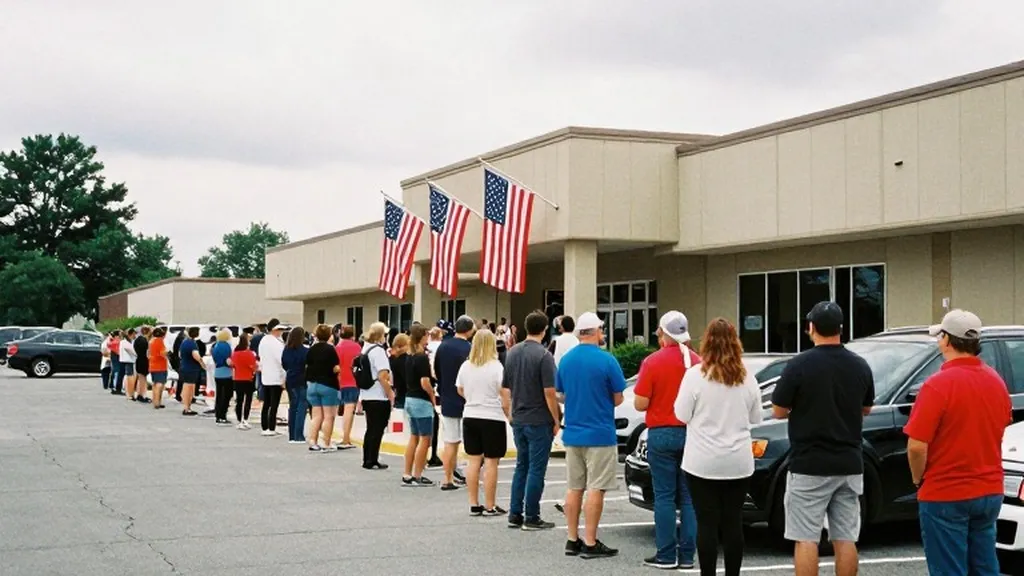
The mood among voters reflects a deep dissatisfaction with the status quo. AP-NORC polling shows that only 35% of U.S. Adults approve of President Trump's job performance, while just 25% approve of his handling of the economy. Approximately 7 in 10 Americans say the country is heading in the wrong direction, with most blaming the president for high prices. More than 57 million people had already voted as of Monday, surpassing the early vote totals from four years ago in many closely watched states. This high early turnout suggests that voters are motivated by the cost of living and the direction of the country, issues that are central to the messaging in the 46 battleground districts.
Democratic figures are framing the race as an opportunity to restore oversight and address economic concerns. House Democratic Leader Hakeem Jeffries, who would become the first Black speaker if Democrats win, has outlined a 100-day agenda focused on the cost of living and oversight of the administration. The party is described as cautiously optimistic, relying on the anger of voters over prices and health care costs. Republican figures, led by RNC Chairman Joe Gruters, emphasize the importance of turnout, stating that if they turn out their voters, they will win. This strategy relies on mobilizing the base in the 21 Republican-held battleground districts to prevent a net loss of three seats.
The administration's actions regarding voting procedures have also drawn attention. A federal judge temporarily barred the Trump administration from carrying out a plan to prevent noncitizen voting, a move that critics say risks disenfranchising eligible voters. In California, a judge ordered the administration to stop demanding that election officials segregate ballots cast by people on lists of suspected noncitizens. These legal developments have heightened scrutiny on the election administration process, with Democrats fearing interference and intimidation as the Justice Department threatens to prosecute local election officials. The U.S. Postal Service has added hours, staff, and special lines to ensure mail ballots are counted on time, a crucial step for states that rely heavily on mail-in voting.
The House race is also being viewed through the lens of the broader congressional balance. If Democrats win even one chamber, investigations and possible impeachment proceedings become likely. A strong Democratic night would boost potential 2028 candidates such as Gavin Newsom, JB Pritzker, and Pete Buttigieg, while potentially complicating the path of Vice President JD Vance. The Associated Press notes that one or two seats could tip either chamber, highlighting how narrow the margins are in this election. Voters in the 46 battleground districts are thus making decisions that will define the balance of power in Washington for the next two years.