Rubio defends Iran war as 'necessary' despite election losses
The Secretary of State stated that the conflict was required to stop a nuclear threat, even as gasoline prices and voter dissatisfaction contributed to a Republican defeat in Tuesday's midterms.
By Layla Richardson ·
One-fifth of the world's oil transited through the Strait of Hormuz before the conflict began. Secretary of State Marco Rubio defended President Donald Trump's decision to launch a war against Iran on Sunday, arguing that the military campaign was essential to protect global security from a nuclear threat, even if the public did not favor it.
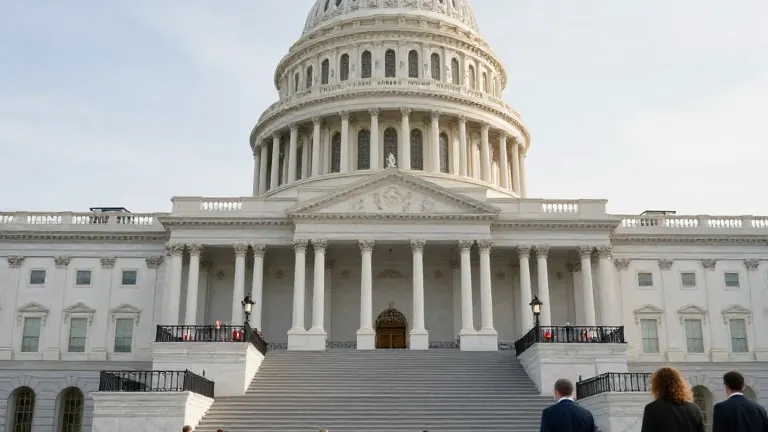
Rubio made these comments in Homestead, Florida, before departing for a Group of 7 foreign ministers meeting in Paris. He addressed the recent midterm elections, in which Democrats seized control of Congress. He noted that the unpopularity of the war and its impact on gasoline prices helped drive the Republican losses.
The Secretary of State pushed back against criticism from Vice President JD Vance, who had recently blamed the conflict for the party's poor showing. Rubio said that confronting difficult security challenges is not always popular but is often necessary for the country. He described the threat from Iran as very real and said Trump acted to stop the Islamic Republic from pursuing a nuclear weapon.
President Trump supported this view in remarks to reporters. He stated that if he had the chance to do it again, the decision to go to war would be remembered as one of the best actions of his presidency. He warned that if Iran had obtained a nuclear weapon, it would have had the capability to destroy the world.
The conflict has lasted more than eight months. During that time, disruptions to shipments in the Strait of Hormuz caused higher energy prices. These economic hits contributed to the financial strain felt by voters, which played a role in the election results.
Iran maintains that its nuclear program is peaceful. The International Atomic Energy Agency reports that the country holds 440.9 kilograms of uranium enriched to 60% purity. This level is a short technical step away from the 90% purity required for weapons-grade material.
Rubio said he would not call current diplomatic efforts a verge of a breakthrough. He explained that Iranian demands are unacceptable and unrealistic. Trump expressed a preference for a diplomatic solution and said it is highly unlikely that strikes will resume if the United States signs a strong agreement with Tehran.
Mediators are working to revive talks. Qatar has presented proposals to address differences between the United States and Iran. According to the Associated Press, Iran is reviewing these proposals but remains unwilling to negotiate until the United States agrees to core conditions. These demands include ending the U.S. blockade on Iranian ports, lifting sanctions, unfreezing assets, and providing compensation for war damage.
The U.S. military has continued limited strikes on Iran. Forces hit air defense targets at least twice in the past week. On Saturday, the U.S. fired on a commercial ship that was attempting to breach the naval blockade on Iranian ports. Rubio said the U.S. has the right to defend itself if there is a clear threat to shipping or U.S. forces in the region.
Trump is scheduled to meet with Qatari Prime Minister Sheikh Mohammed bin Abdulrahman Al Thani at the White House on Monday. He also told CNN that the U.S. has identified 38 bridges as infrastructure targets to strike if military action resumes. Trump said he does not see a reason to escalate the war following the elections.