Douglas County Voters Approve Five-Commissioner Board Despite Legal Confusion
Residents expanded the board from three to five members on Tuesday, but conflicting ballot measures now threaten to return the outcome to court.
By Layla Richardson ·
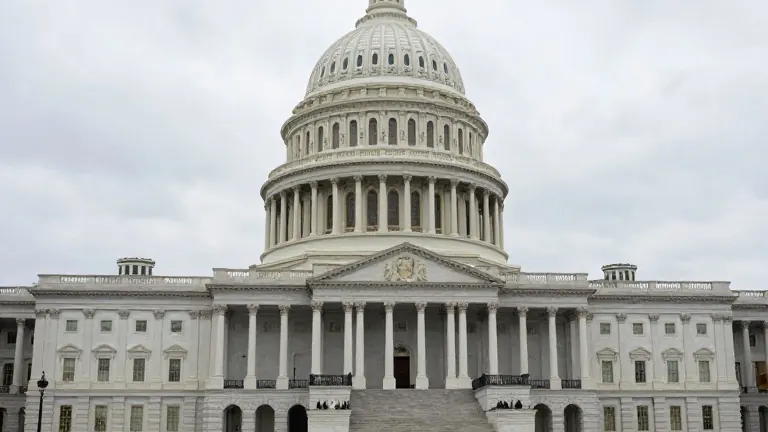
Douglas County residents voted Tuesday to expand their board of commissioners from three to five members, yet the final structure remains legally ambiguous. The vote passed Proposition 200, which authorized the expansion, with 53% of the vote as of 9 p.m. according to the Secretary of State’s website.
Simultaneously, voters approved Measure 1A, a proposal added by the sitting board, to elect all five commissioners at-large. That measure passed with 72% support. This outcome conflicts with Proposition 201, which asked voters to choose between five district-based seats or a hybrid model. Proposition 201 was leaning toward five district seats with 58% of the vote.
The conflicting results create a structural dilemma. Angela Thomas, who led the grassroots initiative to expand the board, said the interaction between the three measures is unclear. She expects the groups to return to court for a judicial interpretation of the vote.
Thomas’s campaign collected more than 20,000 signatures earlier this year to place the expansion on the ballot. Supporters argued that district-based seats would allow more diverse candidates to win local elections. They claimed that at-large elections favor party-backed candidates with larger fundraising advantages, making it difficult for smaller, independent candidates to unseat incumbents.
Tensions rose during the ballot preparation phase. The current board, comprising Abe Laydon, George Teal, and Kevin Van Winkle, included a cost estimate of $760,000 to $1,300,000 annually in the ballot language for Proposition 200. Thomas argued that figure was inflated to sway voters. She stated the actual cost would be closer to $480,000, funded by the general fund without new taxes.
On Aug. 31, the board added Measure 1A to the ballot. The text asked if all registered voters would continue to elect all commissioners in the event the board size increased. Opponents criticized the wording as deliberately confusing. Thomas said voters perceived the measure as a threat to their right to vote, which she believed was the commissioners' intent.
State Rep. Bob Marshall sued the county on Sept. 7, seeking to strike the added measure and the ballot wording. He argued the board relied on a nonexistent state law to justify a secret meeting regarding the question wording. Marshall said a judge allowed Measure 1A to stay on the ballot but noted that the groups would litigate the outcome if the measure passed.
As of Tuesday night, Marshall was coordinating with attorneys regarding next steps. He predicted the legal process would move quickly despite the cost. Commissioner George Teal said the decision would depend on which option received the most votes, suggesting that if the five district options outperformed Measure 1A, that would prevail. Marshall countered that such an outcome would be illegal.