Gridlock looms as Democrats win both chambers
Economic experts predict two years of stalled legislation and continued tariff pressure despite the party's sweeping midterm victory.
By Layla Richardson ·
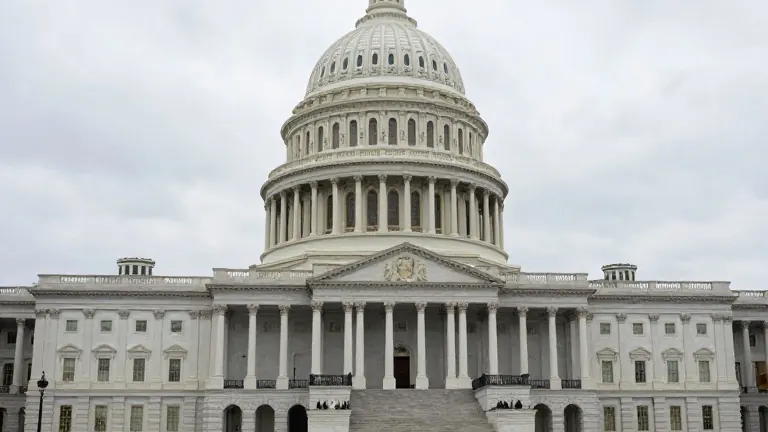
Voters across the United States prioritized the economy above all other issues during the recent midterm elections. The Democratic Party secured majorities in both the House of Representatives and the Senate. This result creates a legislative standoff with President Donald Trump, who has two years remaining in his term.
The political dynamics shifted rapidly in the weeks leading up to the vote. In early October, a Pew Research Center poll found that 56% of Americans viewed the president's tariff policies as mostly negative. Only 20% saw them as mostly positive. Opposition to data center construction, a key infrastructure for artificial intelligence, also drove turnout in several states.
Jacob Funk Kirkegaard, a senior fellow at the Peterson Institute for International Economics, described the coming era as two years of complete gridlock. He stated that nothing of any kind will get done in Washington. Stephen Brown, chief North America economist at Capital Economics, agreed that the near-term policy outlook would remain largely unchanged. Brown noted that Democrats lack a filibuster-proof majority in the Senate and that the president retains veto power.
Investors reacted with mild caution. Global stocks and the US dollar fell slightly following the results. Some market participants worry that Democrats may push for stricter artificial intelligence regulations. Kirkegaard argued that local opposition to data centers will make construction harder, potentially impacting the valuations of major technology firms.
Tariff policy remains a point of friction. The Constitution grants Congress the power to collect tariffs, but various laws allow presidents to implement them during national security or economic emergencies. Trump has used these authorities despite some legal challenges. While Congress cannot easily end existing tariffs, the new Democratic majority can take further legal action to prevent greater escalation.
The war in Iran and rising oil prices present another complex issue. Trump told the Financial Times that he is unlikely to escalate the conflict. Kirkegaard believes that bringing down gas prices is now the most important political goal for the administration. George Saravelos, an analyst at Deutsche Bank, observed that markets are beginning to price in a lower risk of further energy supply disruption.
Congress can exert pressure on the White House through oversight and legal investigations. The prospect of a second impeachment attempt has gained traction among some analysts. Kirkegaard suggested that if a dozen Republican senators voted to impeach, Trump might become more accommodating on economic issues. The new Democratic leadership faces the task of reversing economic policies without the direct power of the executive branch.