China's Central Committee Meets With Record Vacancies in Key Leadership Seats
Roughly 300 officials begin a four-day session on discipline and military oversight amid a 14-year purge that has left eight committee positions empty.
By Vikram Harrison ·
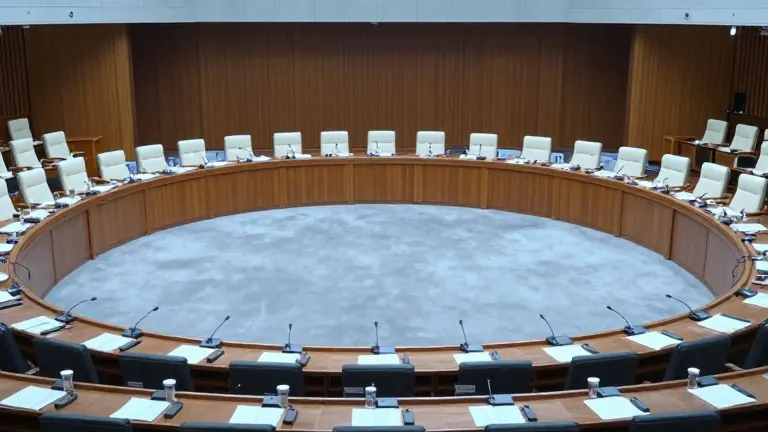
The Communist Party of China convened its fifth plenum on Monday, bringing together approximately 300 Central Committee members to address internal discipline and leadership succession.
The gathering marks the lowest anticipated turnout for such a session since 1976, a decline driven by a 14-year anti-corruption campaign that has removed thousands of officials from power.
President Xi Jinping has maintained a strict stance against perceived complacency, describing certain cadres in a January speech as two-faced and politically opportunistic.
That address, released by state media ahead of the current meeting, criticized leaders who outwardly follow directives but internally resist them or pursue personal interests.
Eight seats on the Central Committee currently stand vacant, while 15 additional members face investigations that could result in their removal.
The anti-corruption drive has also impacted the military, leading to the removal of five of seven members from the Central Military Commission.
Analysts expect the plenum to produce a draft policy decision focused on full and rigorous party self-governance, aiming to improve cadre efficiency and reduce corruption.
Neil Thomas, a senior fellow at the Asia Society Policy Institute, anticipates stricter scrutiny of public spending and increased use of technology to detect misconduct.
Ruby Osman, a senior policy adviser at the Tony Blair Institute for Global Change, noted that the session provides an opportunity to align new leadership with Xi's assessment of national risks.
The meeting occurs roughly one year before Xi is expected to secure a fourth five-year term as party leader, with personnel changes to key bodies likely to follow.
Economic challenges, including sluggish domestic spending and a prolonged property sector crisis, form the backdrop for these internal governance discussions.
The committee will spend the next three days in closed-door deliberations before concluding the session, with potential announcements regarding military command structure and new appointments.