Maria Corina Machado drives into Caracas after US clears way
Venezuelan opposition leader returns by road following eight blocked attempts and a new oil deal between Washington and the interim government.
By Nikolai Patterson ·
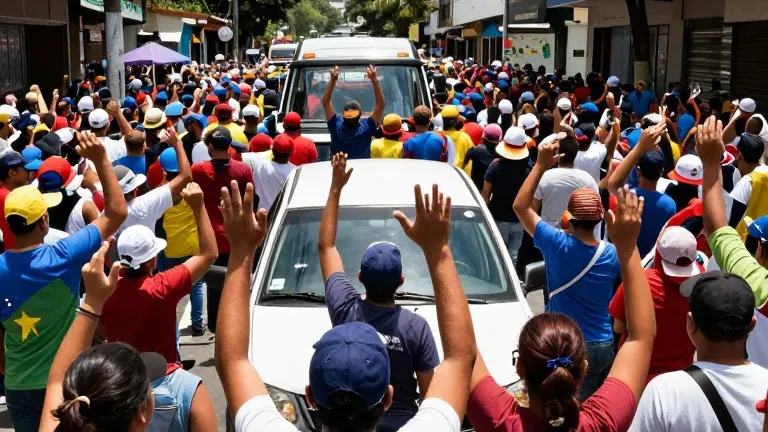
Venezuelan opposition leader Maria Corina Machado arrived in Caracas on October 27, 2026, after traveling by road from the western state of Lara. She drove through streets filled with cheering supporters. This journey marked her first physical return to the country since she left secretly in December 2025 to accept the Nobel Peace Prize in Oslo.
Machado had been barred from re-entering Venezuela by both the local government and the United States. The Trump administration previously stated that the timing was not right. According to reports, she made at least eight attempts to return via air and sea before Washington gave its approval. Gregory Noriega, a 20-year-old supporter wearing a Vente Venezuela sweatshirt, called her the indisputable leader of the nation. An 18-year-old named Hilary described the return as a step forward in the electoral process, while her friend Manuel said the crowd showed Venezuela was no longer afraid.
The political landscape in Venezuela has changed since Machado left. On January 3, 2026, US troops removed President Nicolas Maduro from power. He was flown to New York, where he faces charges of drugs, weapons, and torture offenses. Maduro has pleaded not guilty. His former vice-president, Delcy Rodriguez, took over as interim leader. Rodriguez has reshaped relations with the United States, a shift that contrasts with years of hostility under Hugo Chavez and Maduro.
The return complicates Machado’s position as a potential rival to the current administration. The US recently signed a major oil deal granting a 100-year concession for 65 billion barrels of Venezuelan crude. The agreement was struck with North American Blue Energy Partners, a private company run by businessman Alejandro Betancourt. Machado criticized the deal but directed her remarks at Rodriguez and Betancourt rather than President Trump. Trump, who received Machado’s peace prize, called Rodriguez wonderful and a terrific person.
Political analyst Beningno Alarcon called Machado’s return the most important political event since January 3. He noted that the large reception demonstrated her ability to mobilize support. This gives the opposition a leader on the ground instead of in exile. A joint study by think tanks Polis and Nexo found that Venezuela experienced three times as many street protests in the first nine months of 2026 as in all of 2025. The study also reported that repression of these protests had fallen by more than half.
Secretary of State Marco Rubio stated that Machado’s safe return was the direct result of US-supported reconciliation talks between the government and opposition. Machado still faces charges ranging from treason to conspiracy of insurrection. Her supporters have long dismissed these legal actions as politically motivated. Rodriguez referred to the return as a show, and state television largely ignored the livestreamed journey. Despite this, Rodriguez has signaled willingness to hold talks with Machado.
Trump has indicated he expects full submission from the interim government on energy issues. Some reports suggest Rubio influences decisions through regular WhatsApp calls with Rodriguez. Young supporters in Caracas said their fear of criticizing the government is fading. They insisted the return marks an irreversible political transition, a reality they could barely imagine when Machado left for Oslo a year ago.