Breaking: AI Reckoning: Market Crash Follows Data Center Backlash
Susannah Streeter warns that fears over AI returns are colliding with construction slowdowns as voters reject new facilities.
By Vikram Harrison ·
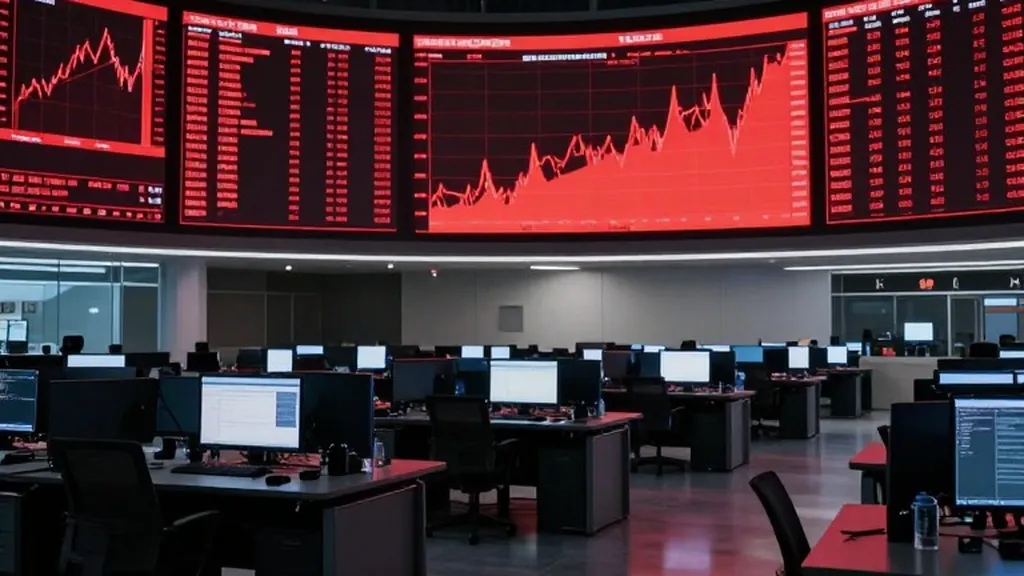
The artificial intelligence trade faced a severe reality check on Thursday as the US stock market suffered its steepest decline in months. The S&P 500 fell 4.3 percent, marking its worst day since April 2025, while the Dow Jones Industrial Average dropped more than 1,800 points to close at 51,868. The Nasdaq Composite, which tracks many of the major technology companies, plunged 5.5 percent to enter correction territory. This sharp decline erased the gains made on Wednesday, when the market had seen its biggest daily rally in months. The selling pressure spread across every sector of the S&P 500 and accelerated as the trading day progressed, reflecting a broad-based loss of confidence in the current economic outlook.
The primary driver of this sell-off was a growing anxiety about the sustainability of the massive investments being made in artificial intelligence infrastructure. Susannah Streeter, chief investment strategist at Wealth Club, described the situation as fresh panic hitting Wall Street hard. She warned that fears that the vast sums poured into AI infrastructure may not deliver the returns investors have been banking on are now colliding with the prospect of a sharp slowdown in data center construction. This sentiment captures the core of the current market stress, where the promise of technological advancement is being weighed against the tangible costs of building the necessary physical infrastructure.
The backlash against data centers was not a new phenomenon but a long-simmering concern that intensified after Tuesday's midterm elections. Democrats campaigned across the country on a platform that included slowing the spread of data centers and AI. Dozens of ballot measures aimed at restricting data center development were voted on in various localities, and voters rejected these facilities in a series of local ballots. This grassroots resistance highlighted a disconnect between the rapid expansion of AI projects and the acceptance of the communities where these facilities are being built. The election results provided a political mandate for these restrictions, forcing investors to rethink the timeline for future capacity expansion.
The surprise of the tech industry regarding this backlash was evident in comments made by key executives. Greg Brockman, president and co-founder of OpenAI, spoke at the WSJ Tech conference in Napa, California, on Wednesday evening. He noted that everyone had been surprised by the reaction to data centers and stated that more work was needed to bring communities on board. Brockman explained that the industry's shift over the course of the year has been to realize that from San Francisco, trying to build infrastructure in Texas, Georgia, and other places, you can't just tweet and say this is going to be good. He emphasized the need to be in those communities to build trust and support.
Dina Powell McCormick, president of Meta, addressed the same conference and echoed the sentiment that the industry needed to change its approach. She told the audience that the sector needed to double and triple down on telling the story of AI. This admission from major players in the space underscores the magnitude of the public relations challenge the industry now faces. The surprise expressed by these leaders suggests that the scale of the voter backlash was not fully anticipated by the companies driving the AI boom, adding a layer of strategic uncertainty to the already volatile market environment.
The financial impact of this shift was immediate and substantial. The Magnificent Seven technology companies, including Apple, Nvidia, and Tesla, shed about $1 trillion in value in the single trading day. Nvidia fell 9.2 percent, losing more than $400 billion in market value, and was the biggest faller in the Dow. The Philadelphia Semiconductor Index, which tracks 30 of the largest chip companies, fell more than 12 percent. It has fallen more than 30 percent since the beginning of October and is almost 40 percent below its peak in June. These figures illustrate the depth of the correction in the specific sectors most tied to the AI build-out.
Market volatility indicators reached historic levels during the session. The Cboe Volatility Index, often referred to as the fear gauge, jumped as much as 5.7 points to above 28 about 90 minutes after the opening bell. This was its highest reading since March 31, 2026. By midday, nearly 800,000 VIX call options had traded, which was 3.5 times the 30-day average. This surge in trading activity indicates that investors were aggressively hedging against further downside risk. The 10-year Treasury yield fell to 4.83 percent, its lowest since September, as investors moved their money into bonds as a safe haven from the tech sector's turbulence.
Analysts are now weighing the long-term implications of the election results on the AI sector. Dan Ives, a tech analyst, stated that there is no way to sugarcoat the fact that Democrats taking control, especially over the Senate, will create major hurdles for AI and tech legislation in the Beltway over the next two years. He noted that the midterm results are a clear sign that the pace of data center build-out will start to slow. This regulatory headwind adds to the financial pressures facing companies that have committed significant capital to new infrastructure projects. The combination of political resistance and potential return on investment concerns creates a complex landscape for future growth.
Despite the severity of the drop, some strategists see potential for recovery. Gene Goldman, chief investment officer at Cetera Financial Group, said the sell-off had become exaggerated and predicted a recovery. He noted that when you have a correction in a bull market, they are typically short lived. He added that it is ugly right now but that they do think we will see a bounce back soon. This view contrasts with the more cautious tone of others who are looking for stability first. The market is currently in a state of flux as investors adjust their portfolios to reflect the new political and economic realities.
More Business · Buyer Beware · Report a business · Got a Story?