Abu Dhabi Talks: Analysts Predict Stalemate as Ukraine, Russia, and US Meet
Delegations gather for the third US-mediated round of negotiations this year, but experts see little chance of a breakthrough due to deep disagreements over territory and security guarantees.
By Layla Richardson ·
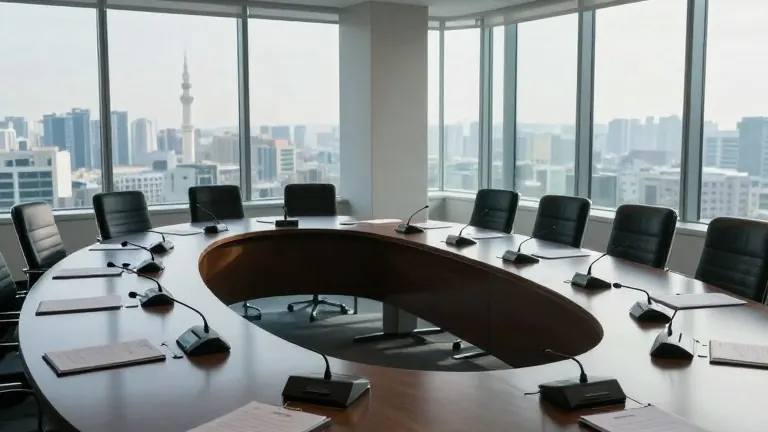
Officials from Ukraine, Russia, and the United States met in Abu Dhabi on Tuesday and Wednesday for the third round of US-mediated peace talks this year. Analysts interviewed ahead of the summit expressed low expectations for tangible results, citing entrenched positions on core issues. The meeting marks the second time in the Emirati capital that these trilateral negotiations have taken place.
The talks occur amid increased pressure on Kyiv from Washington. President Donald Trump recently suggested that Ukrainian President Volodymyr Zelenskyy should want to settle the war, warning of negative consequences if he does not. The US also signed a deal last month to purchase Russian diesel, a move critics argue provides Moscow with revenue to sustain its military operations. Trump claimed on Thursday that the conflict was close to being settled.
Delegation leadership signals the level of engagement. US envoys Steve Witkoff and Jared Kushner led the American team, marking their first such engagement in nine months. Ukraine was represented by foreign intelligence chief Rustem Umerov, along with David Arakhamia, Kyrylo Budanov, and Sergiy Kyslytsya. Vladimir Medinsky, a former Russian Culture Minister, headed the Kremlin delegation, joined by Mikhail Galuzin, Igor Kostyukov, and Yuri Zhygarlovsky.
Disagreement persisted over European participation. French Foreign Minister Jean-Noel Barrot stated that representatives from France, Britain, Germany, NATO, and the European Commission would attend. Conversely, Kremlin spokesman Dmitry Peskov said Europeans would not be included. An EU official clarified that national security officials from the bloc and its partners would be present, though their specific role remained undefined.
Core conflicts remain unresolved. Kyiv demands the withdrawal of Russian forces and a security guarantee. Moscow refuses to end its occupation, demands Ukraine be barred from NATO, and opposes foreign troops on Ukrainian soil. Russia currently occupies roughly 20 percent of Ukrainian territory, including Crimea and parts of the eastern Donbas region. Matthew Boyse, a senior fellow at the Hudson Institute, noted that territory and security guarantees are the hardest sticking points, describing Putin's approach as demanding the maximum and waiting for others to compromise.
Analysts warned that a Ukrainian capitulation could impact other post-Soviet states. Arkady Moshes of the Finnish Institute of International Affairs said Ukraine's sovereignty is at stake, noting that restoring full territorial integrity may already be out of reach. He warned that a capitulation could put Belarus, Moldova, Georgia, and Armenia at risk. Olexiy Haran, a professor at the National University of Kyiv-Mohyla Academy, suggested that technical issues like grain supplies and prisoner exchanges might be negotiated, but agreed that no peace accord would emerge from this week's sessions.
More Politics · World news · Report a business · Got a Story?