San Juan River hits 15 feet, second highest crest since 1911
Gov. Jared Polis declared a disaster emergency in 12 counties after record rainfall saturated the Four Corners region and overwhelmed local infrastructure.
By Nikolai Patterson ·
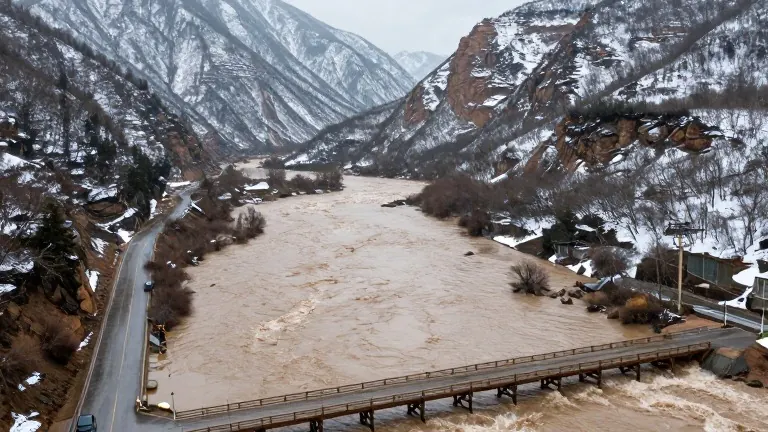
Days of torrential rain left southwestern Colorado with a major flood recovery effort underway. Gov. Jared Polis declared a disaster emergency for 12 counties. The San Juan River in Pagosa Springs rose from 5 feet to 15 feet in just two days. National Weather Service data indicates this is the second highest crest recorded since 1911.
The storm carried tropical moisture from the Pacific Ocean. It dropped 2 to 5 inches of water on most of the San Juan Mountains. Some areas received over 6 inches of rain. Durango broke its all-time precipitation record for October. Officials in Rio Grande County kept dozens of homes under evacuation orders as of Monday. A bridge washed away, and a boil water advisory was issued after sewage systems became overwhelmed.
Response crews face logistical challenges while assessing damage. Patrick Moran, a Forest Service district ranger, told 130 residents in a South Fork church hall that hundreds of miles of roads remain unverified. Sheriff’s deputies in Rio Grande County are being pulled from local flood relief to help hunters stuck in mud in the high country. Moran warned that some areas may not be fully accessible until after spring runoff due to new snow on higher elevations.
Archuleta County responders focused on evacuating residents before another storm arrives Friday. Vicki Shaffer, a public information officer for Montezuma and Archuleta counties, noted that the ground is saturated and cannot hold more water. Teams visited over 100 homes on Monday to check on residents and share evacuation instructions. Some gravel roads and road bases have been washed away, leaving residents stranded. An evacuation center is open at the Pagosa Lakes Property Owners Association Clubhouse.
The flooding had varied impacts across the region. In Alamosa County, a 6.4 mile levee system held back water that reached 3,500 cubic feet per second. Emergency manager Eric Treinen said this volume was higher than the 2,600 cubic feet per second seen in 2019. No mandatory evacuations were ordered there. In Dolores County, Keith Keesling, the emergency manager, reported no deaths, injuries, or home damage. The main impact was impassable dirt roads. La Plata County extended its local disaster declaration through the weekend as the Animas River peaked at over 11,000 cubic feet per second.
Mineral County closed its community center and mining museum indefinitely. Water damaged the building’s electrical system after three days of rain. County administrator Janelle Kukuk said the museum, built into a rock cliff, suffered extensive damage. She noted that officials are watching the forecast for a hard freeze to stabilize hillsides and prevent landslides. Wolf Creek Pass remains heavily damaged, and about eight residents returned to their homes near the river base on Sunday night after evacuating.
Another storm is expected to pass through the region starting Friday. Meteorologist Dennis Phillips said record precipitation likely fell in quite a few areas of the Four Corners. Blue skies returned Monday, but officials warn that saturated ground increases the risk of further flooding and landslides if the new rain arrives.