Aurora's Police Dispatched 3 Hours After Garden Damage Calls Began
City records show 11 Priority 1 and 15 Priority 2 calls queued ahead of the Aug. 8 response.
By Vikram Harrison ·
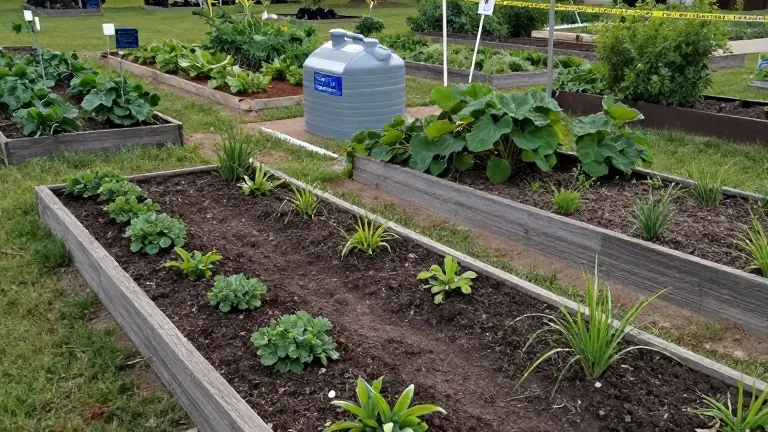
For three hours on an August afternoon, an Aurora community garden was dismantled while residents repeatedly called 911 and dispatchers repeatedly said no officers were available to send. Newly released call records confirm that the initial request for help arrived shortly before 1 p.m. on Aug. 8 at the Denver Urban Gardens site near East 16th Avenue and Yosemite Street. The first listed police unit did not arrive at the scene until roughly 4 p.m. The records show a dispatch at approximately 3:48 p.m., more than two and a half hours after the first call.
Mathew King, who made several of the calls, described the escalating damage to dispatchers. In one exchange, he reported that a person was destroying the garden. "He's destroying our garden and doing thousands of dollars of damage," King said. The dispatcher replied, "I am really sorry this is happening, sir. We don't have an officer to send. As soon as we do, we'll get them headed that way." The dispatcher repeatedly instructed King and others to keep their distance, stating, "Property can be replaced. People cannot. So please, please don't approach him."
Aurora's Police Department and the city have defended the response time, attributing the delay to a backlog of higher-priority emergencies. City records indicate that between 1 and 4 p.m. on Aug. 8, there were 11 Priority 1 calls and 15 Priority 2 calls requiring immediate attention. Aurora Police stated that the department's dispatch process "works much like triage in a hospital" and that "the most urgent, high-risk situations must be addressed first." The garden incident remained classified as a Priority 3 call, which the city defines as a low threat to personal safety that still requires a police response for property crime or disturbances.
The department confirmed that it does not track response times for Priority 3 calls, a practice Mayor Pro Tem Alison Coombs has questioned. Coombs stated that the incident exposed a policy gap regarding how crimes in progress are classified and handled. The city has since moved toward adding a fourth Aurora Mobile Response Team, which pairs a licensed mental-health professional with an EMT or paramedic. Council gave preliminary approval to the unit in the proposed 2027 budget, at a cost of approximately $243,000.
The debate over whether such a team would have altered the outcome at the garden remains open. Coombs told investigators she believes additional mobile response capacity could have helped determine whether clinicians could de-escalate the situation. Aurora Police countered that expanded behavioral-health response capacity would not have changed the outcome in this specific incident. The department noted that while it often becomes the default responder for social and behavioral-health issues, such programs are a partial support rather than a complete solution.
Two months after the incident, much of the physical damage has been repaired. King said Denver Urban Gardens found money to replace some equipment, including beehives and a water tank. He expressed uncertainty about future response times, stating, "We'll just have to see. I don't know." City Council is scheduled to vote on final budget adoption Nov. 9 and Nov. 23.