Data center health fears reshape midterm politics
New research on pollution risks is turning a tech industry expansion into a campaign flashpoint in red states.
By Vikram Harrison ·
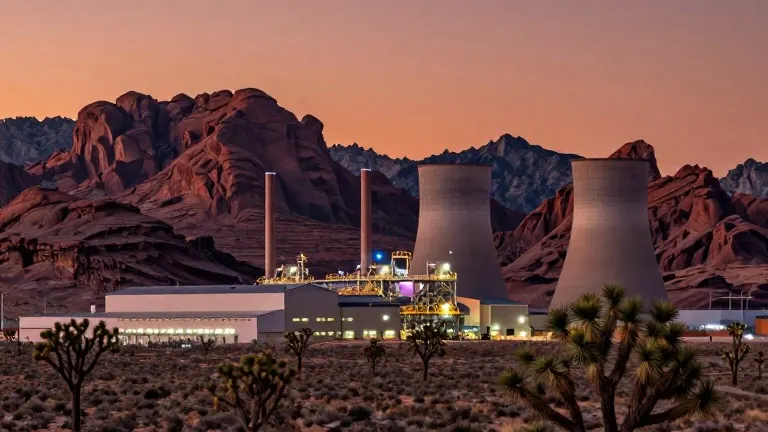
Health concerns over data centers have become a central issue in the upcoming midterm elections, forcing political leaders in traditionally Republican states to reconsider their support for the industry. The conflict arises as emerging studies link the massive facilities to increased rates of heart disease, respiratory illness, and cancer.
Researchers at the University of California-Riverside modeled that emissions from these centers could cause nearly 1,300 deaths annually by 2030. Their findings estimate an annual public health burden exceeding $20 billion in 2028. These projections provide concrete numbers for opponents who argue the industry's expansion outpaces regulatory oversight.
The political divide is sharpest in states where the majority of new capacity is planned. According to Cleanview, 60% of data center capacity under construction is located in states that President Trump won by at least five percentage points. Excluding Virginia, 92% of that capacity sits in states the president carried. This geographic concentration puts candidates in rural, red districts at odds with their party's pro-growth stance.
Lee Hannah, a political science professor at Wright State University, noted that the opposition has formed rapidly. He said decisions made a year ago by local officials to support data centers are now becoming career-ending risks. He observed that the industry's growth relied on a lack of organized resistance, a vacuum that no longer exists.
In Page, Arizona, the controversy has already altered local government. Residents voted out the city mayor in July after the council approved the sale of 500 acres for a proposed $10 billion facility. The site sits near Horseshoe Bend, a popular tourist destination. Doug Herrera, a 64-year-old resident, stands on his porch near a sign opposing the project. He cites light and sound pollution, as well as rising temperatures, as key reasons for his opposition.
Industry leaders maintain that current regulations are sufficient to manage impacts. Dan Diorio, executive vice president of state policy at the Data Center Coalition, stated that the sector is committed to being responsible partners. A review of the largest market indicated that the use of backup power sources like diesel generators is minimal. The group argues that existing state and federal rules limit potential emissions.
The issue has forced itself into high-profile races in Ohio, where more than a dozen local referendums related to data centers are on upcoming ballots. In the state's Senate race, Democrat Sherrod Brown has attacked Republican opponent Jon Husted for his past support of the industry. Brown describes the centers as devouring farmland and sucking up water in campaign ads. An internal memo from the National Republican Senatorial Committee described the issue as an anchor hanging around Husted's neck.
Voter sentiment reflects these local battles. A poll by Washington Post-ABC News-Ipsos found that two in three Americans oppose the construction of new data centers. In Ohio, a survey by Ohio Northern University found that 55% of adults were opposed to construction, with two-thirds holding a negative view of the environmental impact. The data shows that public resistance is driven by specific concerns about air quality, water usage, and noise levels rather than abstract ideological differences.
Residents like Jan Boehme in Page express worry about the immediate physical effects of the facilities. She notes that the hum of generators can exceed 90 decibels, a level that can harm hearing. The cooling systems also contain synthetic substances known as forever chemicals, which advocacy groups say accumulate in human tissue. These specific health risks have moved the conversation from abstract economic benefits to tangible daily impacts for communities living near the proposed sites.
More Business · Buyer Beware · Report a business · Got a Story?