
North Atlantic seabirds: Manx shearwaters experience jet lag
A study in Science finds that these birds' internal clocks drift during long ocean flights, causing them to misjudge their direction relative to the sun.
By Layla Richardson ·
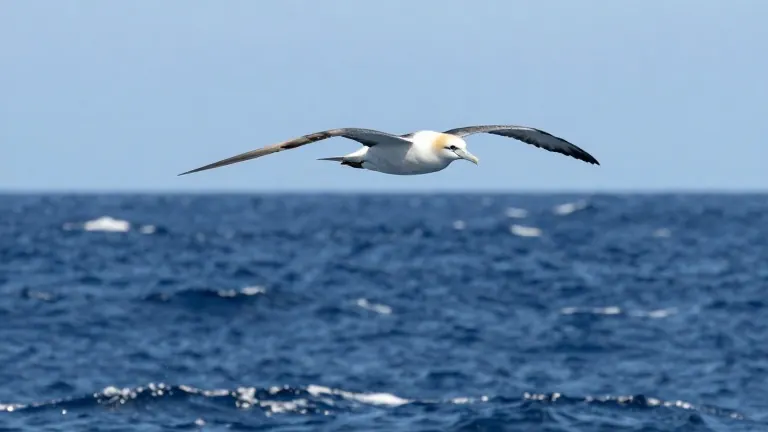
Manx shearwaters experience jet lag during their long transatlantic flights, a phenomenon that distorts their internal timing and leads to navigational errors. The findings appear in a new study published in the journal Science, which identifies this temporal disorientation as a measurable factor affecting how the birds return to their breeding grounds.
Patrick Lewin, a behavioral and sensory ecologist at the University of Oxford and the lead author of the study, described the species as medium-sized birds comparable in size to pigeons. He noted that they feature white undersides and black uppers, possess long wings, and are closely related to albatrosses. These seabirds nest in burrows on coastal islands around the North Atlantic, with approximately half of their population residing in Wales.
The birds travel from their nesting sites to feed in the Atlantic, ranging from a few dozen to more than 1,000 kilometers away. Researchers believe they use a map sense, potentially based on smell, to determine their location. Once they have established where they are, they rely on the sun as a compass to set their heading back to shore.
Navigating by the sun requires an accurate internal clock because the sun’s position changes throughout the day. Lewin explained that a bird traveling south must adjust its angle relative to the sun as time passes. At sunrise, it must fly 90 degrees clockwise of the sun. By midday, it must fly directly toward the sun. By sunset, it must fly 90 degrees counterclockwise of the sun. Without a precise sense of the time of day, the bird cannot maintain the correct vector.
The study indicates that the internal clocks of Manx shearwaters are not perfect. When these birds fly across multiple time zones, their circadian rhythms become misaligned with local time. This jet lag causes them to misjudge the current time of day, which in turn skews their directional calculations. The result is a measurable error in their compass, forcing them to adjust their flight paths to compensate for the temporal discrepancy.