Trump's $5,000 Dividend Promise Falls Flat as Democrats Seize Congress
The president's election-day incentive is now a fiscal burden for the new Democratic majority, who face a $1.2 trillion cost with no clear funding plan.
By Nikolai Patterson ·

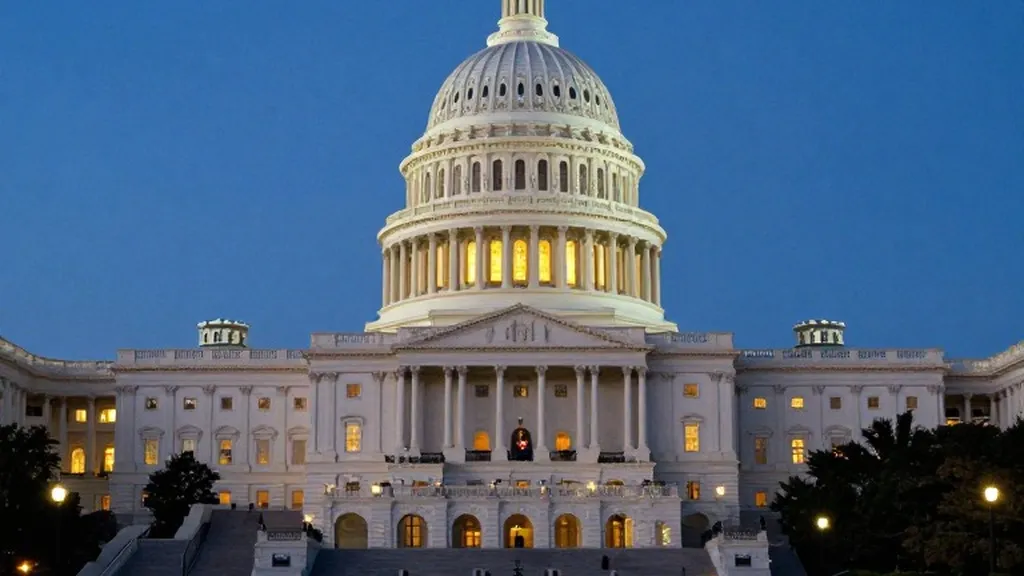
The promise of a $5,000 check for every American adult has moved from a campaign slogan to a legislative headache as Democrats take control of both chambers of Congress. President Donald Trump introduced the "Trump Dividend" at the Republican Midterm Convention in Dallas, explicitly conditioning the payout on Republicans retaining power in the House and Senate. With the results now in, the party he pledged the money to has lost both chambers, leaving the promise in a state of political limbo. The new Democratic leadership is expected to scrutinize the proposal, asking how a president can justify a trillion-dollar expense when his own party no longer holds the legislative keys.
Trump made the pitch during a nearly two-hour speech in Dallas, telling the crowd, "If the Republicans win, you win with us and you get $5,000." He framed the payment as a reward for the nation's "tremendous economic success," comparing it to corporate dividends distributed to shareholders. The president argued that the United States was taking in record revenue, specifically citing tariff income. However, the conditionality of the promise has made it a focal point for critics who see it as an attempt to buy votes during the midterm election cycle.
Speaker Mike Johnson, who led the House until this week, confirmed the complexity of the situation. He stated that congressional approval is needed to authorize the payments, despite Trump's earlier suggestion that the executive branch could act unilaterally. Johnson said he would assume Congress needs to act, calling it a "creative idea" that the new majority would have to navigate. This admission from the outgoing Republican leader highlights the gap between the president's confidence and the constitutional requirements for federal spending. The new Democratic Speaker will now face the task of deciding whether to honor, amend, or reject the proposal.
PolitiFact has analyzed the proposal and found that the biggest payment is far from certain. The fact-checkers noted that the administration has announced no formal plan for the checks and that fiscal experts cast doubt on the feasibility of the payout. The cost is estimated at approximately $1.2 trillion, based on the Census Bureau's estimate of 245 million adult citizens. This figure would significantly impact the national budget, which is already running a deficit of nearly $1.8 trillion annually. The lack of a detailed funding mechanism has led many analysts to question whether the money would actually reach voters' bank accounts.
The primary funding source cited by the White House and Vice President JD Vance is tariff revenue. However, the Tax Foundation estimated that the new global 10% tariff would generate far less than the $1.2 trillion needed to fund the dividend. Erica York, a senior economist at the Tax Foundation, stated that the cost of the checks would spend almost all the revenue projected from the new tariffs over a decade. This mismatch has raised concerns among Democrats that the dividend would require borrowing, potentially increasing the national debt and adding to inflationary pressures that have already strained household budgets.
Democratic leaders have already signaled their skepticism. Rep. Robert Garcia, who is poised to chair the House Oversight Committee, is preparing to investigate executive branch actions, which may include the legal and financial basis for the Trump Dividend. Sen. Bernie Sanders warned that Democrats cannot spend all their time investigating the administration but must also stand up for working-class families. The new Democratic majority, which includes at least 250 House members and a 54-44 Senate majority, will have the power to block or modify the legislation. They are expected to demand rigorous hearings on how the money will be sourced and distributed.
The election results have intensified the debate over the cost of living, a top concern for voters. The AP Voter Poll found that about 8 in 10 voters said inflation has caused a severe or moderate financial hardship. With gasoline prices rising due to the war in Iran and wages struggling to keep pace, the promise of a $5,000 check resonated with many frustrated households. However, the loss of the midterms has made it harder for Trump to deliver on this promise without bipartisan cooperation, which has been scarce. The new Democratic leadership is likely to view the dividend as a political tool rather than a fiscal necessity.
Trump has defended his plan as "easy enough" because the United States has a strong economy. He told reporters that the country is taking in so much money that it can easily handle the payout. However, his approval ratings are low, with only one-third of adults approving of his handling of the presidency according to a July poll. This low approval rating complicates his argument that the economy is booming. The new Democratic Congress will likely use these polling numbers to argue that the dividend is a distraction from deeper economic problems that require structural solutions.
The legal experts have noted that while the promise is likely protected by the First Amendment as a campaign promise, it does not guarantee implementation. Rick Hasen, an election law professor at UCLA, said that Trump would have a strong defense if a state tried to prosecute him for the promise. However, the practical challenge remains in getting the bill passed. With Democrats holding both chambers, they can choose to pass a version of the dividend with strict conditions or reject it entirely. This decision will be one of the first major tests of the new majority's ability to deliver on its own campaign promises while checking the executive branch.