Six farmers survive 22 days in cartel captivity in remote Mexican village
Residents of El Balcón, a community of 750 in Guerrero state, described brutal conditions while holding out against La Familia’s expansion into their pine forests.
By Vikram Harrison ·
Six men walked out of a vehicle on October 16 after spending 22 days blindfolded and handcuffed by armed cartel members. They are among eight villagers kidnapped from El Balcón, a remote community in Mexico’s southern Guerrero state. One man remains missing. The survivors recounted a two-week ordeal that included severe dehydration, physical abuse, and constant fear of execution.
The attack occurred on September 24 when dozens of gunmen entered the village of 750 residents. The attackers targeted individuals working outdoors, including an elderly man with his 13-year-old grandson, a teenager treating livestock for screwworm, and several farmers. The group identified themselves as La Familia. Filiberto Velázquez, a local priest and human rights director, stated the cartel sought to expand its territory toward the coast, viewing El Balcón’s logging resources as an obstacle.
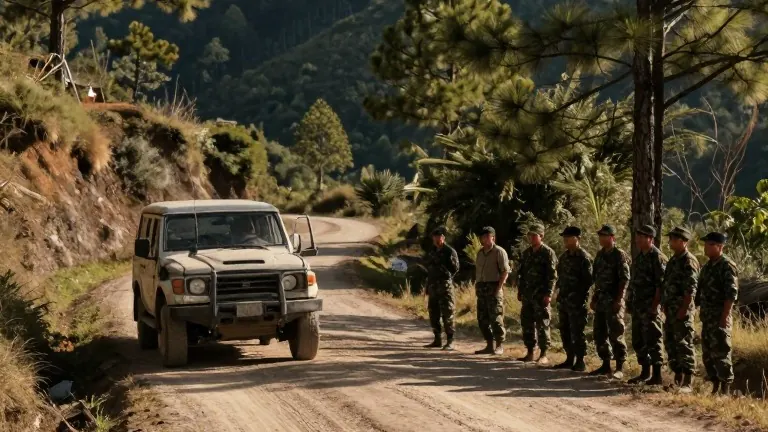
The villagers had resisted joining the cartel for years. El Balcón, known for sustainable forest management, had historically avoided growing poppies to prevent enriching drug traffickers. When the kidnappings began, residents used a regional security network to spot suspicious activity. They launched a drone to observe the abductions and pressured local authorities for a response. Some military personnel were deployed to protect the community.
Captives were held in a crowded house where they slept in tight quarters. The men described interrogations focused on accusing them of working for rival groups. Punishments included rifle blows and kicks if they spoke too loudly. The heat was intense, and food rations were scarce. The prisoners were referred to as “squirrels” because they had to hold their handcuffed hands to their mouths to eat. The group consisted of 136 people, a number shared by a gunman requesting food supplies.
A few days after the abduction, a cartel leader addressed the captives. He stated the government would not intervene and that the cartel intended to control the village’s wood business. The mezcal producer among the survivors said the men lost hope at that moment. A week later, the cartel released the 13-year-old grandson. He walked barefoot for several hours to reach his grandfather’s home. His return provided vital information that helped authorities map search areas.
Tensions rose as supplies dwindled. Captives whispered about the presence of long-term prisoners, including a man held for two and a half years and a woman punished for her son’s defection. Gunmen threatened to force some captives to fight in battles against enemy cartels. On October 7, a video showed six of the missing men in military uniforms being interrogated. Residents recognized the men, who later confirmed they were told what to say before being promised freedom.
Velázquez suggested the release occurred because military pressure disrupted cartel operations. On the day of their release, the six men were separated from the larger group and placed in a vehicle. One was ordered to drive. They passed a military checkpoint without incident. The army announced on October 16 that it had located the six missing persons through intelligence operations.
The reunion with families brought mixed emotions. Survivors cried upon seeing the wife of the one man still missing. Guerrero state prosecutors are currently investigating the case. Velázquez has requested federal prosecutors take over due to the scale of the incident. Authorities have not confirmed if they are actively searching for the more than 100 other captives mentioned by villagers. The military remains stationed in the village as residents continue to gather at night to discuss their safety.