Rafael Introduces Super Ice Cruise Missile with Expanded Warhead
The new weapon features a 1,000-pound warhead and can be launched from F-35, F-16, and F-15 aircraft, with operational status expected in early 2027.
By Vikram Harrison ·
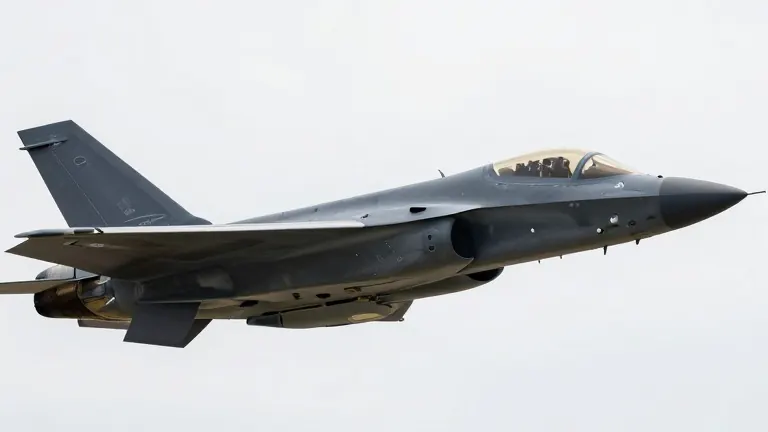
Israel's defense sector continues to refine its long-range strike capabilities as it prepares for future engagements. On Tuesday, Rafael Advanced Defense Systems unveiled the Super Ice cruise missile, a next-generation weapon designed to maintain tactical surprise against adversaries who have studied recent Israeli military methods.
Super Ice is the successor to the Icebreaker cruise missile, which entered service between 2021 and 2022. The new system carries a 1,000-pound warhead, a weight that is four times greater than the Icebreaker's 250-pound payload. Despite the increased mass, Rafael states that Super Ice achieves higher speeds and longer ranges than its predecessor. The missile is compatible with all of Israel's major fighter jets, including the F-35, F-16, and F-15. This versatility contrasts with heavier weapons in the inventory that are limited to the non-stealth F-15.
Rafael officials declined to provide exact figures for the new speed and range. They noted that the Icebreaker had a range exceeding 300 kilometers and reached speeds of at least Mach 0.8 to 0.9, implying that Super Ice surpasses those benchmarks. The system is engineered as a lightweight, low-altitude, autonomous weapon. Its low-altitude terrain-following flight profile is intended to reduce the warning time available to well-guarded strategic targets. The missile features an electro-optical guidance system that uses high-accuracy image-matching technology for precision engagement.
Gad Geva, Senior Vice President and Head of Rafael's Air Systems Division, described the design philosophy behind the new weapon. He stated that Super Ice was developed for integration across a wide range of aerial platforms without requiring significant modifications to those aircraft. Geva added that the multi-domain design enables launch from air, sea, or ground-based launchers. He said the combination of Super Ice and Icebreaker allows customers to select the appropriate weapon system for each target, resulting in savings in mission-planning requirements and life-cycle costs.
Rafael sources indicated that Super Ice was not developed to counter a specific existing threat that prior Israeli weaponry failed to address. Instead, the missile is designed to outpace future defense systems that adversaries such as Iran might develop. The company produces other systems, including the Blue Sparrow ballistic missile, which foreign sources have linked to strikes on strategic Iranian targets. Super Ice also fits into naval contexts, a consideration as Israel has discussed potential conflicts with the Turkish navy. European and Asian nations seeking to deter Russian and Chinese expansion may also be prospective buyers.
The missile is expected to become operational in early 2027. It incorporates advanced AI, electro-optical systems, and anti-jamming capabilities that are more sophisticated than those found in the Icebreaker. The system supports all-weather operation and high-precision engagement of diverse targets.