Hellraiser Haunted House Opens at Universal
Universal Orlando spent years securing rights to bring Clive Barker’s literary nightmare to Halloween Horror Nights.
By Vikram Harrison ·
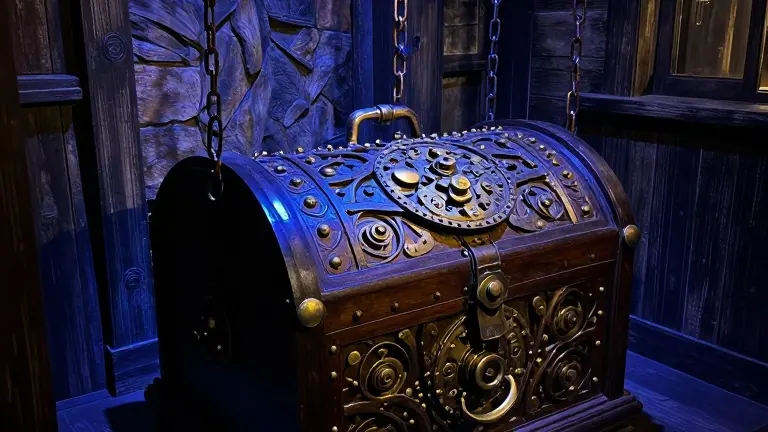
Universal Orlando Resort opened its Hellraiser haunted house for Halloween Horror Nights 35 on October 17. The attraction is the latest addition to the annual event, which has operated since 1991. This year's offering marks the first time the specific rights holders for the 1987 film and its source novella allowed a theme park adaptation.
The house features a towering recreation of the Lament Configuration, the puzzle box central to the story. Mike Aiello, Senior Director of Entertainment Creative Development, stated that the prop is positioned as a threshold rather than a simple object. Guests choose to open the box and enter the queue line, mirroring the actions of the main characters in the film. The design incorporates blue light, crumbling clapboard, and a shirtless mannequin of the character Frank Cotton.
Inside the labyrinth, guests encounter ten versions of Pinhead and other Cenobites. Several animatronic figures trigger pre-recorded lines voiced by Doug Bradley, the actor who played Pinhead in the films. The scenic design blends horror with sensuality, a specific requirement from Clive Barker. Lora Sauls, Assistant Director of Entertainment, noted that Barker insisted the sexual layer of the films remain intact. The team used new projection technology from the Epic Universe hotels to enhance the visual effects.
Securing the license was a process that took nearly a decade. For years, the Universal team did not know who held the rights. Two years ago, certain rights reverted to Barker. The team identified the overall rights holder through merchandising channels and established contact with Barker and the film stakeholders. This modern approach to intellectual property differs from older adaptations, where rights were often fragmented or unclear.
The Hellraiser house follows a pattern of literary adaptations at the event. Previous attractions have been based on The Exorcist, The Shining, and The Bride of Frankenstein. The 2016 Exorcist house relied on audio and smell to emulate the claustrophobia of William Peter Blatty's writing. The Shining house focused on the fractured perspective of Jack Torrance, aligning with Stanley Kubrick's direction rather than Stephen King's original vision. These projects required extensive collaboration with authors or their estates to capture the specific atmosphere of the source material.
The event also includes author-centric experiences, such as Nevermore: The Madness of Poe. This house was created after Edgar Allan Poe's works entered the public domain in 2011. It uses sound and space to depict themes of guilt and obsession found in his short stories. Aiello said the team aims to reward readers who know the source material while keeping the experience accessible to newcomers. This balance allows the attraction to serve both established fans and general visitors.
The Hellraiser menu features items described as horrifyingly beautiful. Christopher Colón, Executive Sous Chef, developed the food and beverage offerings to match the aesthetic of the house. The integration of food, sound, and visual design represents a comprehensive approach to adapting literary horror for a physical theme park environment.