
Bomb threats disrupt 18 European flights
All aircraft landed safely after a new round of alerts hit air traffic in Bulgaria, France, and other nations on Friday.
By Nikolai Patterson ·
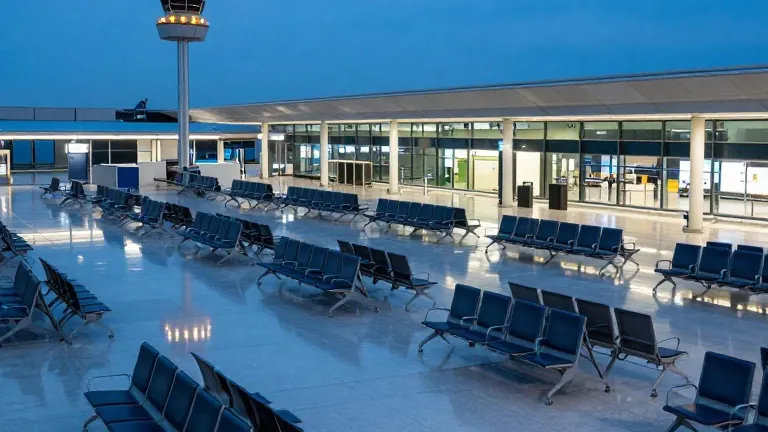
A new wave of bomb threats disrupted air travel across Europe on Friday.
At least 18 flights were affected by the alerts. These routes connected or served Bulgaria, Czechia, France, Italy, Hungary, Cyprus, Romania, the United Kingdom, and Portugal. All aircraft landed safely. Security searches confirmed no explosive devices were on board.
The disruptions caused specific delays for passengers in several regions. Nine flights to and from Prague were impacted. Four flights over France faced interruptions. Two flights bound for Sofia and one flight from Lisbon to Rome were also affected. Danish police investigated a threat at Copenhagen airport, but the facility maintained normal operations.
Hungary’s defense minister, Romulusz Ruszin-Szendi, posted on Facebook that fighter jets were scrambled three times. The jets escorted civilian flights through Hungarian airspace. This came after similar threats on Tuesday and Thursday forced at least 35 flights to divert or undergo security checks. Officials are examining whether the incidents form a coordinated effort to create chaos.
Eurocontrol reported that 26,709 flights were scheduled in Europe on Friday. The affected routes accounted for 0.0674 percent of that total volume. On the same day, threats against media organizations in Ireland disrupted broadcasts and led to staff evacuations. Police searched offices and newsrooms in response.
Irish Prime Minister Micheál Martin told RTÉ Radio 1 that the threats are an effort to sow fear and anxiety. He noted that simple actions can disrupt normal society. Martin added that European security agencies would work to identify those responsible. The British broadcaster Sky also reported receiving a security threat on Friday and notified authorities.
Investigators found no evidence that a hostile terror group or state actor like Russia or Iran orchestrated the hoaxes. Some threats from Thursday were signed by the “fighters of the Male State,” a Russian far-right movement founded in 2016. Spanish foreign minister José Manuel Albares suggested the disruption may link to European support for Ukraine. He described the situation as a reasonable assumption of hybrid aggression and psychological warfare.