Animators defend manual labor against AI shortcuts
Filmmakers at the Savannah Film Festival argue that the long, difficult process of hand-crafting images is what gives animation its emotional weight.
By Nikolai Patterson ·
Animation studios are resisting the rapid integration of artificial intelligence, arguing that the labor-intensive methods behind their work are essential to the final product.
Six filmmakers gathered on Monday at the Savannah Film Festival in Georgia to discuss this tension. The group included Brad Bird, Daniel Chong, Joel Crawford, Januel Mercado, Travis Knight, and Leah Nelson. They spoke during a panel moderated by Variety's Clayton Davis in partnership with SCAD.
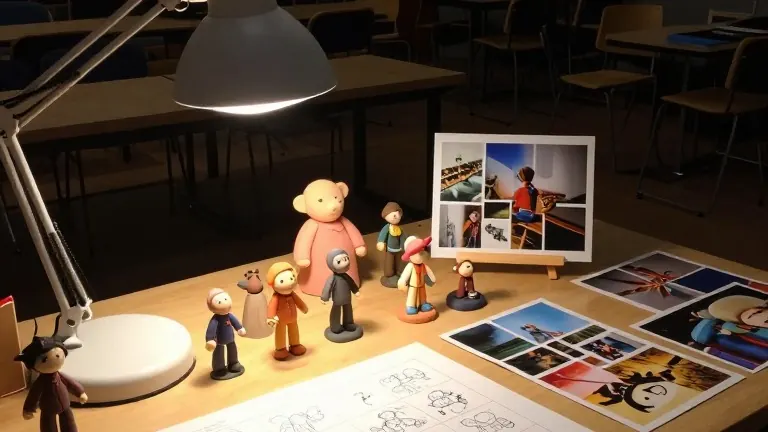
The panelists emphasized that creating an animated world from scratch requires massive effort. Chong noted that every set, character, and piece of clothing is built from ground zero without a camera to reference. He described the process as completely fabricated, which explains why these projects take so long to complete.
Production timelines for these films are often measured in years rather than months. Bird stated that his upcoming Netflix film, Ray Gunn, took roughly 30 years to finalize from initial concept to release, though he was not working on it continuously during that period. Knight, who directed the stop-motion film Wildwood, described the production as a pain due to the sheer volume of work involved. The film required 2,800 individual shots, each of which had to be moved frame by frame to create a performance.
The directors argued that this difficulty is a feature, not a bug. Chong suggested that audiences who look for shortcuts misunderstand why these movies resonate. He said the processes are hard for a reason, and that hardness is what makes the films great. Bird added that a good story must come from life, and the animators' job is to create the illusion of life for the audience.
The choice of animation style also serves the narrative, according to Mercado and Crawford. Mercado explained that the story dictates the visual storytelling. For DreamWorks' Forgotten Island, the team switched between anime and manga styles to follow different character perspectives. Crawford noted that this approach reflected how different people experience and reflect on memories.
Nelson addressed the misconception that a director must be a technical animator to lead a project. She said she used acting references and filmed herself performing actions to communicate her vision to her team when she could not draw the specific movements herself. The panel concluded with Bird advising artists to keep learning as the field evolves.
The discussion took place as part of the SCAD Savannah Film Festival, with Meg Weichman, the artistic manager of SCAD's Theatres and Festivals, introducing the session. She framed the event as a celebration of the imagination and collaboration required to bring animated stories to life.